In today’s global economy, English is no longer just a language skill. It is a career skill, a business skill, and increasingly, a requirement for academic and professional success.
Whether you are a university student preparing for the job market, a professional seeking career advancement, or an organization aiming to build a globally competitive workforce, the ability to communicate confidently in English can open doors to new opportunities.
Yet despite years of studying English in schools, universities, and private institutes, many learners still struggle to communicate effectively in real-world situations. Why does this happen? The answer often lies in how English is taught.
The Challenge with Traditional English Learning
Many English programs focus heavily on grammar rules, textbook exercises, and examinations. While these elements are important, they do not always prepare learners to communicate confidently in meetings, interviews, presentations, workplace discussions, or everyday conversations.
As a result, learners may know English but hesitate to use it. Organizations frequently face a similar challenge. Employees may possess excellent technical knowledge and qualifications, but communication barriers can limit collaboration, customer engagement, and professional growth.
This gap between learning English and using English effectively remains one of the biggest challenges facing students, professionals, and employers today.
The Growing Demand for Practical English Skills
Across Sri Lanka, employers are increasingly looking for candidates who can communicate confidently in English.
Universities are placing greater emphasis on graduate employability and workplace readiness.
Organizations are investing in communication development programs to strengthen customer service, internal collaboration, leadership capabilities, and international business communication.
As a result, there is growing demand for programs that focus on practical communication rather than traditional language instruction alone.
– Learners want to speak with confidence.
– Employers want measurable results.
– Universities want graduates who are ready for the workplace.
– This is where modern, technology-supported learning solutions are making a significant difference.
A Successful Example from Batticaloa
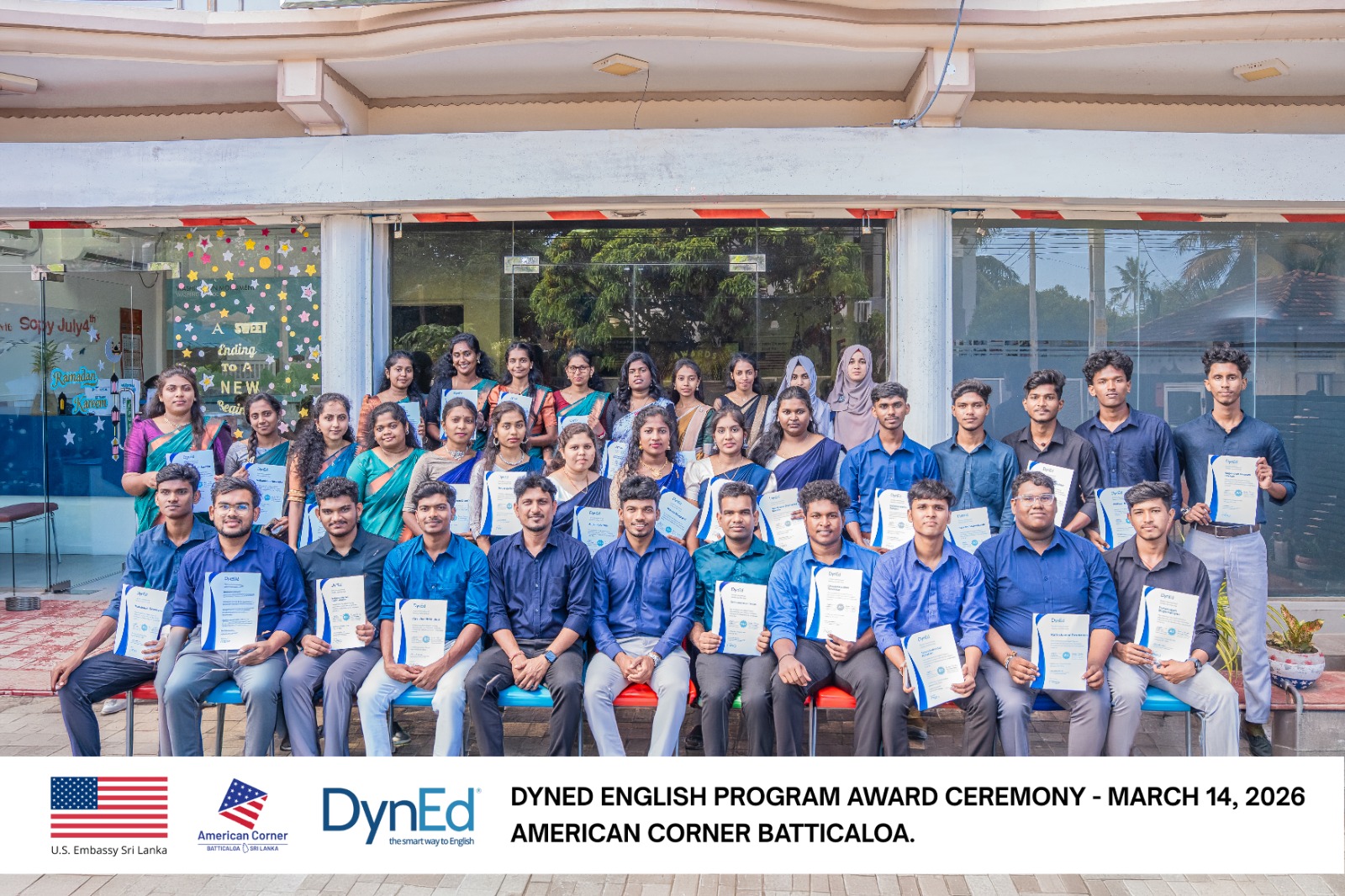
Recently, Headway Learning Solutions partnered with the American Center Batticaloa to deliver a comprehensive English language development program using the DynEd Neo learning platform.
The response from participants was overwhelming.
The program attracted strong interest from learners who wanted a more structured and practical pathway to improve their English communication skills. Unlike many traditional programs, participants were able to learn through a combination of guided instruction, self-study, interactive activities, and continuous progress tracking. Most importantly, learners could see their improvement over time.
The success of the program demonstrated a growing demand for flexible, technology-enabled English learning solutions that focus on real communication outcomes.
Why CEFR Matters
One of the key strengths of modern English development programs is alignment with the Common European Framework of Reference for Languages (CEFR). CEFR is an internationally recognized framework used around the world to measure English language proficiency. Rather than simply completing a course, learners can clearly identify their current level and track their progress toward internationally recognized standards.
CEFR levels range from:
A1 – Beginner
A2 – Elementary
B1 – Intermediate
B2 – Upper Intermediate
C1 – Advanced
C2 – Proficient
For organizations, universities, and learners, CEFR provides a common language for measuring and demonstrating English proficiency.
This creates greater transparency, accountability, and confidence in learning outcomes.
Learning English Faster Through Technology
One of the biggest advantages of modern English learning platforms is the ability to provide personalized learning experiences.
Every learner progresses at a different pace. Some need additional support with listening. Others need more practice with speaking or vocabulary development. Technology-supported platforms such as DynEd Neo help learners focus on the areas where improvement is needed most. Combined with instructor guidance and structured learning pathways, this approach helps learners develop communication skills more efficiently and effectively. The result is not simply better test scores. The result is greater confidence in real-world communication.
Why Organizations and Universities Are Investing in English Development
Forward-thinking organizations and higher education institutions understand that English proficiency directly impacts performance and opportunities.
Benefits include:
Improved workplace communication
Stronger customer interactions
Better collaboration across teams
Increased employability of graduates
Greater confidence in presentations and meetings
Enhanced readiness for international opportunities
As businesses become more connected globally, communication skills continue to grow in importance.
Investing in English development is no longer an optional training initiative. It is a strategic investment in people.
The Headway Learning Solutions Approach
At Headway Learning Solutions (HLS), we believe effective English learning should be practical, measurable, and aligned with real-world needs.
Our programs combine:
– CEFR-aligned learning pathways
– Business English and workplace communication training
– Interactive instructor-led sessions
– DynEd Neo learning technology
– Continuous assessment and progress tracking
– Flexible solutions for organizations, universities, and individual learners
– Whether the goal is to improve workplace communication, strengthen graduate employability, or help individuals achieve greater confidence in English, our focus remains the same: delivering measurable learning outcomes.
The success of the Batticaloa program highlights an important reality.
People want more than English classes.
They want a clear pathway to communicate confidently, perform effectively, and achieve their personal and professional goals. Organizations, universities, and training providers that embrace modern, CEFR-aligned learning approaches will be better positioned to prepare learners for the opportunities of a global future.
Ready to Strengthen English Communication Skills in Your Organization or Institution?
Headway Learning Solutions works with organizations, universities, and educational institutions across Sri Lanka to deliver practical, results-driven English development programs.
Contact us today to learn how we can help your teams or learners achieve internationally recognized English proficiency and workplace-ready communication skills.
📞 Hotline: 077 384 5954
🌐 Website: www.headwayls.com
